One Star

One Star

Friday, July 14, 2023

Street Lamps as Liminal Spirit Spaces


“She began to walk forward, crunch-crunch over the snow and through the wood towards the other light. In about ten minutes she reached it and found it was a lamppost. As she stood looking at it, wondering why there was a lamppost in the middle of a wood and wondering what to do next, she heard a pitter patter of feet coming towards her. And soon after that a very strange person stepped out from among the trees into the light of the lamppost.”


-         C. S. Lewis, The Lion The Witch and the Wardrobe


The lamp post in the woods is a clear image representing Narnia in the minds of Anglophone readers. It seems like a small detail, but it's important enough that it is one of the two clear symbols or events linking the first book, The Lion the Witch and the Wardrobe, with the penultimate book, The Magician's Nephew. In the latter, we see the creation of Narnia. On Earth, the events surrounding Narnia's birth are carried forward by planting seeds from a Narnian tree, producing a magical fruit tree that eventually becomes the fated wardrobe. While in Narnia, its state as a newly created world allows a bit of metal ripped from a lamppost on Earth by a giantess to implant in the freshly formed soil and grow into a lamppost. This lamppost, a piece of Earth, is the first Narnian thing seen by Lucy as she enters Narnia. Lucy is the first human in Narnia since the events of its creation. Her return sets in motion the beginning of the restoration of Narnia from the damage and corruption caused by the White Queen, herself the giantess who entered Narnia at its creation and who planted the metal which became the lamppost.

          The gateway through which Lucy and her siblings enter Narnia is part earthly and part Narnian. The seed of the tree that became the wardrobe came from Narnia, but it grew on Earth. The lamppost, which becomes the guide marker in and out of Narnia, is likewise part earthly and Narnian. The seed of the lamppost came from Earth, but it grew in Narnia. There is a parallelism here based in their liminality.

          But why even include the lamppost? A lamppost does not seem magical or fantastical. It is quotidian in the extreme. An aesthetic is hinted at with the idea that a lamppost is out of place in a forest. Initially, we don't know anything about the forest. We might presume it's magical since it's found in a wardrobe, but nothing indicates that a lamppost is wildly out of place. The events which follow, and what is first seen in the light of the lamppost, begin the unfoldment towards the wondrous as we discover a magical creature revealed in its light. The text does not even indicate that the forest is dark, but the light of the lamppost is where Lucy first clearly sees the faun, Mr. Tumnus.

          This may be because lampposts are, in fact, magical. It may be because lampposts are the sort of magical space in which we expect the revelation of a supernatural figure or a citizen from some other space where spirits and magical beings reside. In the movie posters for The Exorcist, Father Merrin stands bathed in otherworldly light emitting from the room of a possessed child. While the source of the light is a window, some iterations of the image leave that unclear. In almost all versions of it, he very clearly stands under a lamppost, despite that not being the source of light. For most people, the priest arriving under the lamppost, bathed in light in the dark night, is the image they associate with Father Merrin.

          Similarly, flickering streetlamps, insects massing under streetlamps, or streetlamps buzzing and flicking on or off are common elements of our visual language that indicate the presence of the supernatural in films and television.

          I got to thinking about the magical liminality of the streetlamp last night while looking at one through my window. It's a streetlamp that I see routinely. This one is immediately visible from most windows on the western side of my house. As I watched the lamp, it had a strikingly magical ambiance. The magical quality of the streetlamp was often evident. Many streetlamps convey that sense that a magical space resides underneath them, and some are even ingrained in my mind as such spaces.

          Looking at the lamp, I wondered if other people had thought about or noticed this when considering the nature of street lamps. Do other people view them as liminal spaces or spaces for magic to occur? What symbolism or properties do people accord to them? As these questions passed through my mind, I wondered if I could explain how or why they were magical. I wondered if people had encounters or experiences in the small round spotlight spaces beneath them. I pondered about ways to engage them and if anyone had methods for doing so. I have only really considered them in conjunction with crossroads. There are two crossroads that feel particularly magic that are routine parts of my life, and in both cases, their streetlamp contributes dramatically to the presence of the space.

          My reflection didn't settle the answers. It asked questions and considered possibilities. I would love to see people discuss some of these ideas and their experiences. In that spirit, I'll share some of my own thinking.

          We don't think of lamps in houses as something liminal and rarely as something magical. In particular spaces, when they cast light in specific ways, something might seem otherworldly about a lamplit area. It isn't the norm, though.

          Streetlamps present this quality more consistently. In a house, we're dealing with a limited space. That space might, at the outset, be darker than the space outside. The stars and the moon provide some illumination outdoors. In addition to streetlamps, we have people's porch lights, and the light spill from their windows. Inside a house with no lights on or with the power off, particularly if the windows are drawn, there is much less small ambient light. The darkness may be more palpable than outside, and you have a sense of an enclosed space filled with things throughout that darkness.

          Considering the darkness of inside spaces, they should be primed to feel like magical or wild spaces when hidden in total darkness. They don't. They might feel scary or creepy, but a lived-in space does not create the same sense as a wild space just because it's dark. If anything, you feel frustration over the possibility of bumping into things or the urge to find a light. When you're outside, even if there is some visibility, the darkness feels more extensive. You're in an open space. You can't illuminate throughout the full confines of the space because there are no confines. You're probably less familiar with the space. A broader range of things and people could be lurking in the darkness than there would be in your unlit home. The sense of the unknown and the dangers of a wild space become a more imminent part of your awareness, even if you're not in a place that would be a wild space during the day. Wild spaces aren't necessarily liminal, but they are magical. There is room for the unknown and unexpected, and so there are possibilities for things to come into being out from the darkness without hindrance or expectation. Wild spaces also frequently have more otherworldly life than human spaces, as it is often more comfortable for such beings to be more active away from the hustle and bustle of human influence. The cover of darkness spreads that potential into otherwise tamed human spaces.

          This might seem like a reflection or meditation on the darkness of night, unattached from anything more tangible than a mental exercise. Still, there are reasons to consider the power of darkness to shape the tame into the wild. Each of us has likely had times when we encounter an outside space that seems unusually dark. We have experienced spaces that seem somehow different from the rest of what we're experiencing as we walk around at night. These spaces are often at some area that is an entry or exit to some slightly separate location, or near a crossroads, or a tree line. Sometimes they're near a structure that isn't in use or is less regularly in use, or they may be near water. They're spaces that have their own sense of liminality or the unknown. Outside of those spaces which seem specially othered, we have all also likely had moments in the night where being outside, even for something brief or routine, has left us inexplicably feeling like something could be there lurking. It might be in a place where we are entirely comfortable in the day and where we might have caution but not typically concern in the night, but without cause in a given moment, it suddenly feels like there could be something hidden or simply that we shouldn't be there. This is a relatively typical human experience. It indicates but doesn't necessarily prove what I'm saying about the darkness falling and creating wild spaces.

          History and folklore add to this idea. Twilight times, the liminal temporal spaces between day and night, are often associated with the fair folk and the perception of spirits. The winter months, where darkness is more prevalent, are associated with increased spirit activity. The Deipnon, when the moon is gone, and the sky is a deeper dark, is when the restless dead are believed to roam. Night herself was one of the first beings from which other Titanic powers stirred and took form. Night holds within itself the potential for things to be emergent from her darkness. The darkness of night is associated with bringing the supernatural closer to human awareness.

          As we have explored, the darkness in a house and the darkness in the world outside of one's house are different in quality. The relationship of lamps with that darkness also differs. In a home, individual rooms form small areas with clear boundaries. There are walls to reflect light and contain the dispersion of that light. A lamp or an overhead light may dispel the darkness in a space entirely. We can turn night into day easily in our homes with the flick of a switch. We can't do this outside. Outside, we can only carve away at the darkness with small pieces of light. That light highlights the darkness around it, as the darkness defines the light. There is a liminal quality to the space defined by the light. It is an exterior space, but it is defined away from the collective space around it by the concentration of light. It is created by light but is noticeable because of darkness. It is a space with a boundary, but it is permeable, and the light that creates it glows diffusely beyond that boundary. By its nature, it is a depiction of the quality of liminality.

          The magical quality inherent in this visual of light scratching against an immersive and broad darkness is one most humans recognize. We have had forms of outdoor lighting to deal with the dangers of walking around in the dark since at least the first millennium BCE in various places. Still, modern people think of the era where it became exceedingly prominent, the "Gaslight Era" or "Gaslamp Era," when we think of the romanticized image of lights illuminating historical cities. The idea that lighting developed with the glow of gaslight is so pervasive that people once circulated memes saying that the Catholic Church forbade gaslight in Vatican City because setting up lights to illuminate the darkness flew in the face of God. In actuality, some European cities had laws requiring outdoor lights at roads and intersections as far back as the 15th century, so setting up lights to illuminate the darkness wasn't new. Romans even had a word to describe slaves whose job was lighting outdoor oil lamps. The Vatican government temporarily forbade the lights over environmental and possibly political concerns related to using a foreign gas provider.

          Outdoor lighting was common before the gaslight era, but this is the era of the past in which pre-electric lighting is more familiar to us. As a result, whereas steampunk fiction focuses on alternative histories and developments surrounding the dawn of industrialization and modern technology, another genre focuses on more magical fiction set in that same era. Magical and supernatural fiction set in the backdrop of a fictionalized 19th century is called “Gaslamp” or “Gaslight” Fantasy. The glow of gaslight against the semi-mysterious but not-too-distant past creates an evocative setting for a magical space that seems adjacent to what is real for us but distant enough to seem unbelievable. There is, again, a kind of liminality to that.

          The liminal nature of a fictional context does not make streetlamps liminal spaces. It reflects how the crossover in boundaries between a lit space and a dark space, a wild space and a space impacted by human technology, evokes a sense of magic and the other. The evocation of such a sense also does not prove an actual magical reality to the lamplit regions of the night. Still, it indicates something that inspires us to perceive them as magic. That inspiration could come from an authentic magical nature inherent in, or at least often present in, these spaces.

          Streetlamps being a marker or a maker of a magical space is an interesting thing to consider regarding how and why they are magical. We can explore how that power reflects back into the world through human imagination. To find a useful meaning, we must consider how and why we would engage these spaces. To me, the first thought that arises is the similarity to the experience of noticing the movement of other beings just in the edges of our sight. Shadows of something other slipping into visual awareness at the edges of our attention are one of the modes through which otherworlds express themselves, sometimes in the light but often in the darkness. The feeling of the streetlight space reminds me of the feeling of observing these sorts of spirit movements. They seem like the sort of places that could be prime for that type of observation or for interacting with things that are on the edge of perceptibility already.

          I have frequently written about using lamp invocations to connect with intermediaries and the illumination they can provide in viewing and communicating with the spirit world. Typically, I address this as invoking the spirit through the light of an oil lamp or a candle. The way in which a streetlamp provides illumination and the ability for someone to immerse themselves in that illumination makes them feel like an option for applying that kind of work. The magician could stand bathed in the streetlamp's light and invoke the god of light. Through that conjuration, the magician would aim to stand within the illumination of their intermediary ally. This could be used to see those spirits mentioned above at the periphery of our awareness or to connect specifically with that intermediary. It could also be a precursor to conjuring another specific spirit.

          Regarding conjuring a spirit and immersing ourselves in the power to perceive the spirit world, the streetlight space could be viewed as a physical expression of the nexus point in which spirit communication occurs. Some forms of consecrating space to create the appropriate conditions for interacting with a spirit address the idea of mimicking a liminal space like a crossroads or drawing on the power of a token taken from such a space. Using the streetlight as the physical space of the conjuration would obviate the need for a token because you would be working directly within that liminality. Streetlights can often be found at intersections. A tucked-away intersection would allow you to leverage both the streetlamp and the crossroads, possibly also combining in the lamp invocation.

          These are not statements that are intended to convey methods you should be using or methods I have used. These are ideas I've been kicking around for the last day or two. These possibilities of using this space are examples of spit-balling magical options that seem reasonable and exciting. I would love to see people discuss or try them and post about them, and I'm excited to try some of them myself. I have worked at a crossroads with a streetlight but did not use the light. I have considered using a streetlight as a place to leave offerings adjacent to a crossroads several times. However, I have generally used other crossroads instead and have yet to actively utilize the light as a part of the ritual.

          I think an essential thing to remember when considering something like this is the real and present nature of magic. Magic doesn't stop. Magic isn't something that only developed in the past, so it isn't something that only utilizes old elements. We don't need to change and reinvent magic constantly. We don't need to deconstruct magic and strip away its parts. We don't need to make space for our every impulse, comfort, or convenience and say magic fits itself to whatever we want it to be. We do, in fact, need to be adaptable and engage and explore the world around us. Living magical traditions have frequently had to adjust and find uses for new things they encounter. Sometimes they have to let go of old materials and tools as they become unobtainable and new options which do similar things make their way into the material lexicon of magic. Similarly, as new types of spaces, new types of experiences, and sometimes even new types of technology occur, we can ask ourselves how they fit into the animistic structure of our engagement with the world. This is part of keeping magic real and present such that it is grounded in the reality of our experience instead of the fetishized fantasies of a lost world we might imagine we'd like to live in.


Thanks for reading.  If you enjoyed this please like, follow, and share on your favorite social media!. You can also visit our Support page for ideas if you want to help out with keeping our various projects going. Or follow any of the links below.


We can be followed for updates on Facebook.

 Check out my newest book, Familiar Unto Me: Witches Sorcerers and Their Spirit Companions

If you’re curious about starting conjuration pick up my book – Luminarium: A Grimoire of Cunning Conjuration

 If you want some help exploring the vast world of spirits check out my first book – Living Spirits: A Guide to Magic in a World of Spirits

NEW CLASS AVAILABLE: The Why and What of Abramelin 

Class Available: An Audio Class and collection of texts on the Paracelsian Elementals

  More Opportunities for Support and Classes will show up at Ko-Fi

Sunday, July 9, 2023

The Witch Stands in Power


 I am very vocal in the position that what a witch is should be clearly defined. I often find it strange that many people are intensely unwilling to define what a witch is, but that those same people want to dictate what a witch can or must do. They won’t try and say certain magical practices are necessary for a witch, and some won’t even assert that witches even need to do magic. When it comes to social positions, the magical community, politics, and relationships with the world around us, people who aren’t comfortable saying what a witch is are incredibly comfortable saying what a witch must do and who they must be in the eyes of others. 


A witch…can do whatever the fuck they want. A witch should be themselves. A witch can shape that self, or mask that self in whatever way allows them to work their power in accordance with their needs, desires, or situation. 


Witchcraft is a power that belongs to the witch innately. That power others the witch. That power creates a liminality within the witch. That power makes the witch a witch. That power can be inherently possessed or it can be acquired, but it is always intrinsic to the witch’s being. Because the witch is a witch as a matter of what they are, statements about the requirements for beliefs, lifestyles, or behaviors based upon the character or the archetype of the witch will generally fall flat. 


Still, there are elements of witchpower which will connect with who the witch is. 


The witch is liminal, and the witch is other. Being liminal means that even while being other, some witches will have the capability to navigate dominant and mainstream social structures even while not fully fitting them, and even while being to some degree separate from them. There is a power to this. 


When we try to assert that the witch is the outsider or the voice of the downtrodden, we ignore that witches have also been at the highest echelons of society. When we take the position that witch and magician are interchangeable then we have to recognize that magicians have often been important parts of dominant social structures. If we take the more historical view of witches as humans who have an engagement with the supernatural which others them, makes them different from other humans, and gives them access to power, we can still find witches who have had various relationships with the social order. 


The witch is a possessor of power which can instill fear and a force which ranges between the neutral and the antagonistic. The power of witchcraft makes the witch dangerous because it is their own power, not a power accorded to them by others. Even a kind and helpful person with power like that will have an edge which can be frightening. There is a nature akin to electricity. Elements of how that power is shaped within a person can create realities which compound the fear, the danger, and the relationship with the antagonistic. 


That relationship with the antagonistic is seen in folklore. Witches are often the enemy. Witches subvert social roles. Witches cause misfortune. Other magicians stop witches. 


While having elements of form and soul which are different from the typical human, the witch is still human and humans are dynamic. They aren’t typically all one thing or another thing all the time. 


The ability to clap back, to stand up for oneself, to push back against things, or even to be dominant and assertive can feel like antagonism. When those elements are present along with unpredictable and illicit power, then it is reasonable for folklore to characterize it consistently as dangerous and something to be avoidant or wary of. 


Interestingly enough, the idea that a witch has to be the power in opposition to dominant structures is served by this image of antagonism. The desire of people who want to assert that the witch is a force of opposition often want the witch to be the noble powerful beacon for the poor and those forced to the margins. People want the witch to be a kind and inspiring version of Leland’s Aradia. They don’t want an antagonistic nature, they want kindness with the capability to punch up. The relationship with being something that can and should be a source of fear, and which may run strongly towards the antagonistic doesn’t easily fit that image, but it isn’t entirely counter to it either. 


Historical witches don’t only punch up. They might punch laterally. They might punch down. The power to punch is theirs to do with what they like. We can have preferences about how we think a person should act. Those preferences don’t define who is and who isn’t a witch. That power and relationship to magic does. 


My main point here is that witchcraft is about power. It is a power that shapes and changes you, and it is a power that is yours. You live that power as you feel you are drawn to. It isn’t an archetype that needs to be a convenient tool of social expression. 


Why am I making this point now? I haven’t posted a lot of blogs in awhile, and have mentioned a couple times that I’m building a bunch of content to start releasing consistently. So, why this today? 


On the one hand. I like making this point. This point is important to me. 


On the other hand, the subject has come up elsewhere. Three people who write good and popular material, contribute importantly to the magical community and deeply consider things they see have all blogged about the subject. 


Ian Chambers’ July 4th blog post “Remembering the Witch in Witchcraft,” is very good. I agree with a lot of it. I feel like it gives a little too much quarter to the idea of religious witchcraft and hints at economic persecution instead of real witches regarding history in a way which I feel reflects a populist sentiment more than what was consistently happening. But those things are small moments in a piece which he explains is a stream of consciousness reflection. The piece works. It gives an image and an idea to think about. 


John Beckett’s July 9th blog post “The Witch Stands in Opposition,” takes inspiration from and kind of responds in agreement with Ian’s piece. They’re both patheos bloggers, so this is kind of normal there. I don’t entirely disagree with John’s take. John doesn’t outright frame it as a political position as many people do, but it feels like he dances next to that framing, at the least. Elements of it are also weird given positions John has taken on witchcraft and magic otherwise. Some of the specific places it goes, I don’t think works. The post is popular though; it’s accessible, and for those reasons maybe some of those points within it need consideration. 


Jason Miller responded to John’s post, also July 9th…since…that is today, with the blog post, “The Witch Doesn’t HAVE to Stand in Opposition.” When he showed it to me, I told him I had just read John’s post and had been debating responding. When I opened Jason’s post I saw that what I intended to open with, “a witch can do whatever the fuck they want,” was pretty similar to how Jason thought to respond, “the witch stands wherever the fuck they want.” Jason addresses some interesting nuance. Where I look at the ability to be the inside-outsider as a form of power, which I view as a power related to the dynamic quantum liminality of the witch that can often relate to the friction that creates magical charism, Jason addresses the idea that the witch can be other in a way which is encompassing, larger than, and above the structure. It’s an interesting way of exploring the idea. It's a perspective that especially makes sense coming from Jason when you consider Hekate, who stands at the center, looking in all directions, reaching out through them to encompass everything. He also addresses how forcing a sense of otheredness on the basis of a specific set of social criteria doesn’t work - and can even be detrimental. 


I think to a degree, all four of us are talking about things which kind of underlie our own work and are addressing those concepts in juxtaposition to the concept Ian started with - where is the witch in the contemporary concept of witchcraft. 


I think all four posts are worth reading and considering, but looking at the various opinions adds depth and a range of perspectives which all bring something to the table. 


Part of me wants to break down specific thoughts on “The Witch Stands in Opposition,” but this post is long enough, and doing that maybe isn’t the point. I’ve kind of addressed why the witch doesn’t get told what they need to do and the irony of people doing that. That is more what I needed to do. As the reader, I think there is value in you taking your own power, holding it up, letting it hold you up, and from that perspective, diving into each of our interpretations and deciding what they mean when juxtaposed in the liminal space which is your own personal crossroads of existence and experience.

Thanks for reading.  If you enjoyed this please like, follow, and share on your favorite social media!. You can also visit our Support page for ideas if you want to help out with keeping our various projects going. Or follow any of the links below.


We can be followed for updates on Facebook.

 Check out my newest book, Familiar Unto Me: Witches Sorcerers and Their Spirit Companions

If you’re curious about starting conjuration pick up my book – Luminarium: A Grimoire of Cunning Conjuration


 If you want some help exploring the vast world of spirits check out my first book – Living Spirits: A Guide to Magic in a World of Spirits


NEW CLASS AVAILABLE: The Why and What of Abramelin 


Class Available: An Audio Class and collection of texts on the Paracelsian Elementals


 More Opportunities for Support and Classes will show up at Ko-Fi
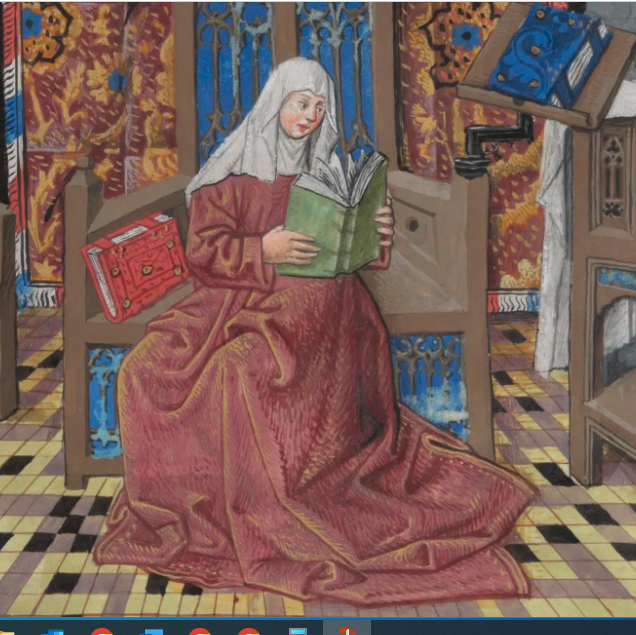
*The image above of Christine De Pizan was selected because she was a wildly successful figure who stood in opposition to elements of the social order while supporting other elements of the social order which she believed were necessary and fit the divinely ordained structure of society. She was also a feminist in the 14th century who wrote a story in which she traveled to a magical place with the Sybil of Cumae and she wrote positively of Medea and Circe and reclaimed the power of magical women figures despite being a successful member of royal courts. Whether she possessed witchcraft or not isn't something we can answer, her father was a court astrologer, but that is not indicative. She is an appropriate figure for the point being made here, and if witchcraft were about archetypes she would be a great image from which to build an archetype in many ways.

Tuesday, February 14, 2023

Not (Just) a Beginner Book


           Before posting announcements about my new book, Familiar Unto Me: Witches Sorcerers and Their Spirit Companions, my last blog post was about intermediate and advanced books and training.

          People often bemoan the lack of advanced books on magic and NeoPaganism. It's easier to write beginner books, and with a beginner book, you don't have to wonder if people will have the background to understand or use what you're writing. It's still important to have books that move out of that beginner comfort zone.

          In my post on intermediate and advanced materials, two of the options for advanced work and advanced material were either perfection of basic elements or in depth focused exploration of a specific subject.

          Familiar Unto Me falls into the latter category. The text covers just about everything you could cover on familiars and treats ideas often related to familiars. We look at practical elements, the nature of the idea and the nature of the relationship. We explore the history of ideas and beliefs that build a worldview in which familiar spirits can exist. We look at several options for acquiring them across several different approaches to magic. We look in depth at a particular case of a group working with a familiar, and we look at how familiar spirits can tie into efforts to create new living traditions of spirit work.

          It is a deep dive that covers a broad range of elements of a specific topic.

          So the book is well suited to intermediate and advanced audiences because of its thorough treatment of a singular topic. It can also be useful for beginners, not necessarily people reading their first book or two, but people who are starting off and figuring things out. Exploring specific topics in depth can still be useful and interesting in that phase. This will also introduce a lot of more intermediate concepts, ideas, and practices, which will give readers who are still in the beginning phases of their explorations some direction around where to explore. Since it covers a range of traditions, it will still serve the beginner who wants to add work with a familiar to their spiritual experience.

          It does not introduce beginner techniques. There is no grounding or shielding, there is no work on energy, or scrying, or clairvoyance. We don't introduce what conjuration is, or what spirits are, or how to communicate with them. Readers intending to work the material in this book will need some skills and knowledge in those areas. This post will include some suggestions at the end for books which will help establish those elements for people who need them.

          The book does cover all the elements needed to acquire a familiar in several systems of magic, and so anyone with basic magic skills will find a method which is workable for them.

          It also breaks down benefits and difficulties of different types of spirit work. While this is an underexplored discussion, it's important, and well suited to intermediate practitioners trying to decide what directions to focus on. This will also be useful in guiding beginners who are starting to explore spirit work.

          The wide range of perspectives addressed and the far reaching depth of exploring every corner of the idea of familiars means the book has a wide range of audiences it can serve, but will also have material that just isn't for some of its readers. Hopefully, people will appreciate the thoroughness and enjoy the parts that are relevant to them, and find interest in looking at approaches outside of their practice. With this wide range, while the book serves advanced and intermediate practitioners, it has a lot to offer for those starting their journey as well.

          If you find yourself looking for an introduction to some of the elements and skills that underlie this book and the practices contained, here are some options. You don't need all of these. Most readers will be ready to pick up Familiar Unto Me and just run with it, but if you're feeling like you need some more background, any one or two of these will probably close the gaps.


The Sorcerer's Secrets: Strategies in Practical Magic by Jason Miller - a general introduction to the skills and practices of modern sorcerers


Living Spirits: A Guide to Magic in a World of Spirits by BJ Swain - includes introductions to scrying and spirit conjuration and explains a wide range of spirits and how to work spirits into practical magic


Seven Spheres by Rufus Opus - an immersive, potentially initiatic, approach building relationships through spirit conjuration designed to be simple and user friendly. Introduces new students to conjuration and spirit work


Luminarium: A Grimoire of Cunning Conjuration by BJ Swain - avoids a lot of theory and ideas and focuses on laying out simple skill building practices to make you more capable at spirit conjuration. Provides a simple system of spirit conjuration. Designed to be able to take a complete beginner through introducing the idea, using preparatory practices, and gathering tools into readiness for their first conjuration in as little time as possible.


Folk Witchcraft: A Guide to Lore Land and the Familiar Spirit by Roger J Horne - a collection of witchcraft folklore and introduction to witchcraft ideas which can be used for building witchcraft practices drawing on historical content and ideas


Consorting with Spirits: Your Guide to Working with Invisible Allies by Jason Miller - This book covers many elements of spirit work and several useful ideas to consider while exploring spirit work. It presents a couple approaches to working with spirits. Many of the ideas and practices here can be pair with approaches to working with a familiar. 


Sex Sorcery and Spirit: The Secrets of Erotic Magic by Jason Miller - will introduce elements of sexual magic which may help the magician with spirit work and provide more background for those looking to use the sex magic practices described in Familiar Unto Me

Image: High King Margo. From SYFY's The Magicians. Went with this photo because Margo is in grad school for magic, so it fits the theme of intermediate and advanced work...also...Margo is the ultimate bad ass and I'd be honored to have her reading my work on Familiars. 

Saturday, February 4, 2023

Cover: Arise Witch Queen!


The original draft of Familiar Unto Me looked at basic ideas and practices, but didn't explore the history, cultures, mythologies, and folklore related to those practices. When I decided to explore those things it led to a lot of opportunities for interesting research and presenting interesting information and conclusions.


The book is kind of like three, almost four, books in one. The first part discusses familiars more generally. It presents some options from a traditional witchcraft and grimoire perspectives for acquiring familiars and how to work with them.


Part two dives into folklore, history, and mythology in depth. It works to look at ideas that existed in Northern European myth and folklore that present a worldview in which the idea of a familiar spirit could exist. Then it looks at how these ideas relate to practical work.


Part three discusses how a magical lodge obtained and worked with a familiar spirit. This becomes the back drop for looking at how familiar spirits and spirit possession fit into building living traditions of spirit work. It also lets us look at the place of these kinds of traditional spirit work in Victorian revival magical systems, and presents practical methods drawn from those systems for traditional spirit work.


The text covers a very complete range of material and addresses working from various approaches to magical work.


The original draft mentioned figures like Isobel Gowdie and Andro Mann. When I was editing, I was surprised how little I talked about them. This contributed to my decision to explore more folklore and history; I wanted to lean into their stories a bit. There were a lot of other figures and ideas to talk about as far as evidence of early modern beliefs surrounding the witch's familiar goes, some of them were more germane. But, Gowdie is one of the main figures people think of regarding historical accounts of familiars.


When I was considering possible cover motifs, Gowdie again sprang to mind. As the cover came together, it became suggestive of an idea that I really liked.


The lowest layer of the cover is an image from Edmund Spenser's 16th century text, The Faerie Queene. It depicts a beautiful woman with a spear, in a strong and commanding stance amid the trees and long grasses. A man, who appear nervous, looks on as he hides behind a tree.


A middle layer is formed from the text of Gowdie's confession as recorded in Pitcairn. The text describes the familiar imps and the nicknames the witches in the Aulderne coven had received.


Arising from Gowdie's words about witches and faery imps is the image of a strong commanding magical woman.


This seemed like an interesting and powerful composition.


Gowdie's confessions are popular because they have so much detail. They are elaborate confessions, spanning four instances, in which she describes not only what the witches accomplished but the details of their spirit interactions and magical techniques.


Some people look at Gowdie as a hero for witches. Her coven stole from the wealthy, killed nobles who abused the people, and provided a means of power for people who were otherwise poor and downtrodden. She has become a Scottish Folk-version of Aradia in the minds of many modern witches.


For others, she is a tragic example: a young woman we know nearly nothing about, except that she was taken into custody on the accusation of witchcraft. She may have been tortured, she may have been killed; the details of her experience aren't clear and so those elements are uncertain. What stands out most to those who don't like the idea of Gowdie being treated as a powerful witch figure, is that we don't know what motivated her confession. Was she a clever person spinning up magistrates who she knew would convict her regardless of what she said? Was she a delusional person who, driven by suggestibility, imagined vivid hallucinations that fit the desires of her accusers and led her to confess to things which damned her?


We don't, and can't, really know. Critics seem at odds with taking Gowdie's account as being a partially accurate description of her experience, but that is also a possibility.


I think it's important to consider the struggle Gowdie, and others like her, probably encountered. It's valuable to consider that their confessions may have been fabrications caused by a variety of motivations. There is value in considering the possibility of delusions, although a surprising number of people would have been subject to the same delusions, in that case. There is also a value in considering the possibility that these people were witches or magicians and that their confessions reflect their reality as seen through the blurred and dirty lens of a court stenographer's biases.


The cover art reflects that.


Our powerful magical woman both arises from and is obscured by the words which are present. The words reflect the plight of being caught by witch finders because they are sourced from a trial transcript, but the words, themselves, describe the wondrous visionary experience of these witches. The words are obscured, illustrating the fact that trial evidence simultaneously reveals and obfuscates elements of early modern popular magic and witchcraft. Taken together, there is a struggle between the words, the image, and the presentation itself, as each strive to become the central element defining the visual composition. That struggle is like our inability to determine the actual nature of these experiences, even as they draw us in and cause us to look deeply at them to ascertain what they can reveal. Ultimately, through the various pieces, regardless of what the reality was, we are able to see hints that cause us to imagine a woman of power and resistance, birthed from faery magic. We imagine Gowdie as someone who is fit to stand in the presence of the Faery Queen, and whose soul might have descended into the sidhe and barrows to become a magical equal with their powerful residents.


When I think about the cover art, this is what I think about...and I find it exciting. Between those covers, stories, folklore, myths, and history describe a world of exciting magic and spirit experiences sandwiched between descriptions of how we can be part of those same experiences. Hopefully, for those who desire it, this book will help them descend into the world of faeries, imps, and demon companions, and arise as someone able to work magic with their aid, and learn from their knowledge, until they too are competent to dine with the Faery Queen and the Witches Devil as welcome guests, empowered with the tools to navigate such spaces.


Follow on Facebook for more announcements, and info on the release of Familiar Unto Me: Witches Sorcerers and Their Spirit Companions, as well as blog posts and other items of interest! The book will be out sometime around the middle of this month, possibly a little earlier. The paperback may be as early as February 12th on Amazon with a hardback edition about a week later, and on Barnes and Noble the paperback and hardback are scheduled for approximately February 20th. 


Thursday, February 2, 2023

Announcement: Familiar Unto Me: Witches Sorcerers and Their Spirit Companions - Soon To Be Released


Well, it was about a year ago that I thought I would be releasing this book and my book on Witchblood, but, the extra time has turned Familiar Unto Me into a much more substantial book that has been more thoroughly researched and presents copious additional material and many added avenues of practice. 


I released the finalized table of contents this morning for Familiar Unto Me. Here are the table of contents, the potential back cover description and the description that will be used on Amazon. 


I hope these get you excited for the book. I'm excited for it. Watch this space, and the Glory of the Stars Facebook page for announcements. My anticipation is that it will become available in the next couple of weeks. (The Witchblood book will be the next project I'll be finishing, so follow along for updates on that too.)

Back Cover Text

"Spirits abound. Through most of human existence, humans have recognized that we share a living breathing world with a multitude of embodied and disembodied life. Magic teaches us to go to the places of spirits and entreat them, and to call them to us and bargain with them. But what about the spirits that remain close with us?

 Familiar Unto Me seeks to fill the gap in modern magical literature surrounding the ubiquitous but underexplored phenomenon commonly referred to as the familiar spirit.

 Join us as we explore the basic ideas surrounding what a familiar is, how to acquire and care for one, and how to work with one in magic. Then we will journey through mythology, folklore, and history to explore ideas about familiar spirits. We will look at novel contemporary ideas that have linked to the concept of the familiar spirit and by unpacking how they differ from the folklore which inspired them, consider how they can give us new and additive ways to explore magic. This will lead to a detailed exploration of a magical group's work with their familiar spirit and look at the place of familiars in modern magic.

 Ultimately, our journey will provide you with the tools needed to acquire a familiar and develop a deep and powerful relationship. It will also set you on the road, should you so choose, to exploring how spirit work, and positive possession can contribute to birthing a new living spirit tradition of magical work from the surviving strands of European magic.

 The text presumes you have the essential skills of spirit work. It provides the myths, folklore, and history it discusses in detail for those who may not have as thorough exposure to it. It presents nine rituals and describes a tenth. The rituals are presented with detailed analysis. The text provides options for grimoire magicians, traditional witches, NeoPagan witches, Pagans, and ceremonial magicians."


Description:


"The familiar has been a staple element of the image of the witch for centuries. Despite its ubiquity in folklore, art, books, movies, and television depicting witches and magicians, familiar spirits are an under explored element of modern magical literature. Familiar Unto Me changes that by presenting a comprehensive look at familiar spirits.

The book is divided into three parts. Part One introduces and discusses the concept of the familiar spirit. The basics of acquiring, maintaining, and working with a familiar are presented. Considerations for planning your own rituals for obtaining a familiar spirit are discussed, and example rituals are presented. The focus in part one is familiars for witches and sorcerers; the defining elements of each approach to magic and how it impacts acquiring a familiar are discussed.

Part two explores the concept of familiar spirits in Pagan and NeoPagan contexts with a focus on mythology, faerylore, and the history of the familiar in trial evidence and folklore. Copious descriptions of myths, folktales, and faery stories are presented along with detailed exploration of historical figures, literature, and folk beliefs to paint a picture of the worldview and history of ideas surrounding the familiar spirit. Contemporary approaches to working familiars, fetches, and fylgjur are discussed and analyzed along with traditional lore to explore new and innovative magical concepts adjacent to the familiar spirit. Methods for acquiring a faery familiar are discussed along with the presentation of an early modern ritual for encountering a faery queen.

Part three explores the adventure of a group of magicians acquiring a familiar spirit for their lodge. It presents the rituals, details of planning and execution, and a discussion of the experience. This exploration becomes the basis of exploring the role of familiars, and positive spirit possession in contemporary revivals of magic as a path towards creating living spirit traditions rooted in historical European magical practice, informed by the wisdom and experience of living spirit traditions in the Americas. Part three also explores often overlooked role of spirit magic in the Victorian magical revival and the evidence of sex magical practices related to familiar spirits. Rituals for an elemental lover round out the collection of rituals.

The text provides nine rituals. Two of the rituals are presented with variants for the elements so that the magician can work directly and conveniently from the book. An additional traditional ritual is described and analyzed in detail along with comparison to a description of the ritual in a folktale. Each ritual has either some analysis of the ritual, explanations of why it is designed the way it is, or discussion of experience executing the ritual.

The book discusses spirit assistants from antiquity through today. Modes of working for grimoire magic, traditional witchcraft, NeoPagan witchcraft, Paganism and modern ceremonial magic are all presented or discussed."

Thursday, August 4, 2022

Where are all the Intermediate and Advanced Books? What even is intermediate and advanced...?


          Sometimes, my friend likes to look at reviews of my books. Living Spirits: A Guide to Magic in a World of Spirits has a rating of 4.7 out of 5 on Amazon, I feel pretty good about that. There are a lot of reviews I'm pretty proud of. I watched closely when the book first came out because it was new and I really wanted to see what people thought. I try to check still sometimes, I appreciate the reviews and would love if more people who liked my books reviewed them. A lot of the time now it's my friend who brings them up. He's been popping over to scope them out off and on for the last two years. He's not a magician, but he finds the reviews interesting and will comment on ones that seem odd. Last night, he brought up one that I don't think I'd noticed before.


" I haven't finished the book yet. I am only on chapter 7 but already feel like some of the information is a tad bit hard to retain because it's so detailed. This is definitely not a book you can just pick up and read straight through. I do think the author has alot of knowledge on the subject and I like that there are rituals listed"


          He felt like the review, which gave the book 4 stars, basically downgraded it for not being a beginner book. 4 stars isn't bad. In a world of actual ratings, 4 out of 5 isn't bad, in a world of algorithms and statistics, yeah, everyone wants as many fives as possible. I like the content of the review though. Having rituals is good, author has lots of knowledge, and it's very detailed. The draw back, it's not really an easy read for someone beginning to explore this and you have to take your time reading it. That, can still a good thing depending upon the goal of the book.

          I kind of like the idea of Living Spirits as a semi-intermediate book. It grew from a series of posts introducing concepts and approaches to spirit work. It formed into a book as I expanded, reassembled and added to them in order to create an explanation of a worldview, and approach to that worldview, and serve as a kind of magical field guide to several types of spirits and spirit-work. It kind of presumes some magical practice and is intended to build a deeper layer for that practice even if it could be approached without that background.

          Luminarium: A Grimoire of Cunning Conjuration was written with kind of the opposite intention. Someone who has no magical experience, or who has magical experience but no experience with conjuration or spirit magic could take Luminarium and hit the ground running within a week or so. If someone reading it has magical experience or conjuration experience it tweaks and arranges some stuff in new ways, and short-cuts some things which should hopefully present new ideas to experiment with. It's written more for a beginner with the intention of being used as a handbook or working manual rather than an instructive text, but with the goal of also being useful for an experienced magician.

          I think a lot of magic books feel like they need to be written with the intention of being an accessible how to book that can be picked up by anyone. It makes sense, the market for magic books isn't large, so it's easier to have an audience if every book works for every reader. It's still probably good to have an idea of an experience level in mind, and it's probably good to sometimes have the intention of writing with the expectation that the reader should have some experience. Jason Miller's new book Consorting With Spirits, openly talks about expecting the reader to have experience. I would still feel very comfortable handing it to a beginner and it is a book I'd happily recommend if a friend asked me for books to start with. It's very accessible and it presents ideas that make a good foundation for thinking about spirit interactions.

          My friend's comments that the review sounded like the only issue was that my book isn't a beginner book lead to me talking with him a bit about how "so what do we recommend as intermediate or advanced material?" is a question that gets asked every few months on the magical internet.

          More and more these days people seem to shy away from actual answers. Learning from spirits, or all books are beginner books have become more popular answers. In reality, learning from spirits can also be a beginner activity, and all books don't have to be beginner books.

          I think part of the issue is, as I mentioned, that it's easier to write something accessible for beginners. Partially, because of the audience, partially because we can feel more confident that we're writing something meaningful to that audience. We also don't have to strain our depths as knowledge holders or researchers if we're writing for beginners. Keeping language simple, direct, readable and clear could be something that some people find easier with beginner material, or it could be something some people struggle with regardless of the level of the material. It should probably be a goal even in intermediate and advanced material though.

          I think another element of the issue is "what constitutes beginner, intermediate, or advanced?" There isn't a set firm answer for that. We don't have set curricula for all of magic. As we progress, things that seem advanced to others seem like simple beginner info to us. I was once part of a group where we were doing series of 101 and 201 classes in a local store. We frequently got feedback that the 101 material was much more advanced than people expected in a 101. We thought we were keeping things super basic. Beginner, intermediate, and advanced can be very subjective things. I think this is true in lots of disciplines, not just magic. People want to know what material is really advanced, when often the answer is there is no advanced material, there are advanced approaches to material.

          When I was first getting serious as a fencing coach, or really, a little before I got serious, I put together a curriculum which I thought was basic foil. I told some foilists I could work with them but I could only teach basics in foil since my background was sabre. Later, those experienced foilists pointed out that I was explaining stuff they thought was intermediate or advanced. The curriculum I put together really constituted the bulk of anything anyone would learn while training as a foilist and was sufficient for taking people from beginner to what would be considered an "elite" athlete by some measures.

          I would still say my foil curriculum covers beginner and intermediate material, not advanced material, because there isn't advanced material. Advanced is instruction modifies approach and perspective. Either way, it kind of illustrates how beginner, intermediate and advanced are based on your own self-assessment. I assumed my background in foil was less extensive than it was so I limited my self-assessment to being capable of work with beginners.

          Breaking down my current assessment of beginner, intermediate, and advanced in fencing is pretty simple. Beginners learn to move, they learn basic footwork, they learn the essential concepts and rules of the sport, and they learn simple fundamentals that give them a few basic actions. They have enough to move around and try the sport and fence some bouts.

          Intermediate training is a much bigger range and can have intermediate-beginner, intermediate, and advanced intermediate as subheadings if that's helpful to you.  Intermediate students start learning how to more or less correctly execute and use those fundamentals. They learn some contextual ideas that form basic tactics. They learn a wider range of techniques and that wider range of techniques is what lets you break down those subheadings. Eventually, your wider range of techniques starts to become more about details and variations and more tactical elements of application.

          An advanced student has learned essentially all the techniques. So lessons for an advanced student will often just be very demanding very detailed execution of fundamentals. Advanced students perfect the things they will rely on. They work on determining what techniques to lean into and begin to specialize those and learn to create opportunities to make those specializations more useful. They deepen their tactical and ideological understanding and how to apply that understanding. They might work on filling specific gaps or wholes, but usually with new ways of applying or correcting existing knowledge. Advanced isn't about new techniques or secret moves, it's about going deeper and becoming more perfect with what you already know.

          Magic can be the same in a lot of ways, but it also has some differences in how we might look at concepts of beginner, intermediate and advanced.

          The A.'.A.'. curriculum, and those curricula which led to it and which stem from it are based on this kind of structure. The magician initially learns some basic rituals and meditations, and a lot of basic ideas as a beginner. The intermediate magician puts those techniques and ideas together and contextualizes them in more involved systems of techniques that involve more powerful and effective approaches. The advanced student has learned all the techniques of the system and pulls it all together into a complete understanding of the system and the magical universe which contextualizes it. They express this understanding and let that lead them to a space in which they more deeply engage that magical universe as a context for understanding their work and their existence.

          We don't have to look at the A.'.A.'. or other ceremonial magic systems for that approach to make sense. A beginner in witchcraft or sorcery learns some basic ideas and basic skills. Frequently they learn a few spells or rituals to try out. They get enough of a sense of things to try it out, see that it works, and realize that they want to explore more. They might not even really know what direction they want to take that exploration.

          The intermediate beginner starts exploring different systems and experimenting with them. They try different techniques and ideas and experiment with what suits them. An actual intermediate student might pick a system or two to really study and explore and experiment with and start really diving into or identifying with it. An advanced intermediate student gains real traction and success with that system, and maybe has some fair understanding of a few other systems.

          An advanced student might dive in deep with specific aspects of a system they're working with. They might explore more deeply the development of ideas and practices and what that reveals about how we engage and use them, what they mean, and how to expand them or get more out of work with them. They might be proficient in a few disciplines and begin looking at how those disciplines inform an understanding of each other and how one can innovate and develop better approaches without compromising, harming or misappropriating the systems they're being drawn from. They gain a level of mastery over their system which lets them explore, compare, innovate and create ways in which to engage, use, and teach their system of working.

          When we approach concepts of beginner, intermediate and advanced this way, it remains that there are materials and teachings out there which are good for beginners and good for intermediate students of all levels. Spirits can teach at all of those levels, but so can books and teachers. Throughout the course of beginner through the range of intermediacies there are new techniques, knowledge, interpretations and approaches to learn. As we move into being legitimately advanced, there are still materials which will help, but I would argue that the materials might not be advanced so much as our relationship to how we explore and use them. I suppose some materials might be legitimately advanced on their own though, but would be more inclined to assume certain experiences, lessons from spirits, and maybe lessons from embodied teachers would approach the space of advanced material.

          We can all recognize the types of books that are beginner books. Intermediate beginner books might still kind of look and feel like beginner books to people with more experience. They still go deeper in their knowledge. They present more complex ideas or methods or a more thorough explanation. They might give a firmer basis on which to build ideas and practices. As we get to more legitimately intermediate work then we might start to see more specialization on particular aspects of traditions. There might be more particular information that gets missed elsewhere, more attention to correcting errors and assumptions, or techniques that have more impact or require more experience or attention to explore.

          As we move to advanced intermediate and advanced material we start to move outside of texts that are written for magicians. Academic books, history, anthropology, philosophy, botany, biology, medicine, and more might be things that inform a deeper exploration of more refined technique and refined thinking about the systems and approaches we're using. Some of these sorts of materials might also be useful for an intermediate student. There might also be some practical texts that are useful at these stages because of how specialized they are, or because of how much depth of experience the author communicates within the particular fine tuned area of the subject or system.

          Where particular materials fit in isn't necessarily a hard and fast delineated thing because there aren't set curricula and the way we engage these systems and this information will vary from person to person as well. We might also find books that seem really specialized but are still kind of intermediate-beginner because the author's depth of knowledge or skill just doesn't let it go beyond that point. Thinking about materials from this kind of perspective can also help us evaluate materials. Does something seem like it should be focused and taking a deeper approach and should therefore be more of an intermediate or advanced intermediate work, but the material it provides is still basic stuff you'd find in beginner books, riddled with errors, or just ungrounded speculations? Is it just material that isn't useful because it's the author expressing an aesthetic or an enjoyment of the feelings that something provides rather than practical lived experience with ideas or methods which can have practical impact? Then maybe those books really are beginner books even if they seem more specialized, or maybe they're just not good. Looking at where work fits can help us evaluate it.

          Because there are so many different approaches to magic this model of how we engage information isn't the only way to consider when classifying something as beginner, intermediate, or advanced. One system might be viewed as more advanced than another. Sometimes that is warranted and sometimes it is a misapprehension. Since I came up through the A.'.A.'. system I had an impression that Abramelin and grimoire work were more intermediate or advanced material that needed to be approached once you did the grade work. Now I realize there are more spirit driven approaches which could place this work much earlier in someone's magical development. Some people might say devotional work with spirits is for beginners, where conjuration is more intermediate and things like trance possession are more advanced, whereas other people might have different views because of how their systems approach those things. Differences in point of view and in systems of training can make these classifications harder.

          We might also need to consider the aptitude of the student. Some people are well suited to the most basic and mild systems of magic. Everything they ever explore and encounter might seem like beginner material to other people. This doesn't mean that there isn't some gradation for them as far as the material is concerned. Some of this gradation is a false structuring. For example, it has become popular in the eclectic Wicca community to treat working with deities as an advanced idea that beginners should avoid and should be cautious in approaching. There isn't a good reason for this if you have good material explaining that kind of work. It should probably be one of the first things being explored. It's viewed as advanced because people are told it is, not because they need to work to understand it. In that context, learning a system of divination might be more intermediate because the student needs to expand their grasp of beginner material to understand how divination works, and then they need to learn all the features of the divination system. The need to explore and increase understanding and assimilate a broader range of material might make that a more intermediate study for some people. Many of us might dismiss that as still being a beginner element of work. Maybe for those people who approach it as intermediate, things will click, they'll expand further and their frame of reference will change. It might still be good for us to be patient with other levels of ability and understanding and recognize that there are many framings for these hierarchies of complexity, or more appropriately phases of development.

          All in all, I think modeling beginner, intermediate, and advanced with the type of nuance referenced above where works might fall into different categories dependent on how they're approached or what purpose they're serving is going to give us the most mileage. Acknowledging that particular systems, tasks, or techniques might be contextualized as beginner, intermediate or advanced depending on the student is important too. There is also simple space for saying something like _Wicca: A Guide for a Solitary Practitioner_ is a beginner book, but maybe _Obeah: A Sorcerous Ossuary_ is an intermediate book (although a beginner book for that particular system), and the entire Brill catalogue could be taken as advanced books. Ultimately, the answer isn't that there is no intermediate or advanced material because no one writes it. The answer isn't that all material is really beginner material - some material would be ridiculous for a beginner, some material could be used by a beginner but applied more reasonably by an advanced or intermediate practitioner. The answer isn't, books are for beginners and spirits will teach intermediate and advanced material. The answer comes down to framing those terms and understanding what they mean. From there we can understand what to look for as we move ourselves, or help move others through those phases of development.

          As authors and teachers we can think about what it looks like when we create beginner material, intermediate, or advanced material. If we have a clear framing we can get closer to effectively building those materials. If we just say "this subject is more intermediate" then, we'll have people who find the subject to still be a beginner subject and others who think its advanced. If we can say "how do I handle this material and who is my audience and what should they get out of it? how should they be able to approach it? who will be able to approach it?" Armed with questions like that we can approach building material that more effectively addresses those developmental phases.


Thanks for reading.  If you enjoyed this please like, follow, and share on your favorite social media!. You can also visit our Support page for ideas if you want to help out with keeping our various projects going. Or follow any of the links below.


We can be followed for updates on Facebook.


If you’re curious about starting conjuration pick up my new book – Luminarium: A Grimoire of Cunning Conjuration


 If you want some help exploring the vast world of spirits check out my first book – Living Spirits: A Guide to Magic in a World of Spirits


NEW CLASS AVAILABLE: The Why and What of Abramelin 


Class Available: An Audio Class and collection of texts on the Paracelsian Elementals


 More Opportunities for Support and Classes will show up at Ko-Fi