One Star

One Star

Saturday, July 9, 2022

A Map Without A Territory - Spirits, Time, and Space


          I was talking with a non-magic friend the other day and he asked me about spirits connected to places. The idea of a place having a certain character or spiritual presence is a pretty common one even outside of the magical world. The idea that ghosts attach to particular places is also a common one even for people who have no real experience of the spirit world. Sometimes, we might wonder about spirits which might have broader ranges of activity, or types of spirits associated with a place or a culture. Do those show up elsewhere?

          When we talk about Gods or Angels or Devils there is generally an assumption that they can go wherever. They can hear a call from someone wherever that person is. That doesn't mean there aren't spatial associations with those beings. Angels and Devils have associations with particular directions, particular times, and particular astrological moments. We might expect them to arrive from a given direction. We might expect communicating with them, or getting them to do things in the world, to be easier at certain times. We tend to think of gods as less limited, but in many cultures gods still have homes that are physical places we can go to. Many goddesses are identified with rivers or natural formations. Some gods live in particular monuments or particular land formations associated with their myths. In certain periods of Greek culture, and in early Christianity, this was explained as spirits in service to those gods residing in temples or in physical places and being approached and interacted with as the god, rather than the god itself living there.

          When we look at "small gods" or various other-spirits that we might consider fair-folk or something similar to the fair-folk, the spatial quality becomes more pronounced. Some types of spirits are known to live in houses, some live in the woods, some live in rivers, some live in deserted or unclean places. It depends on the type of spirit but based on the type of spirit they have places they live. While we might recognize similarities between spirits in one culture or another we can also see that the particular "species" or type of spirit differs. Different cultures have different spirits which have their own appearances, ways of interacting with people and their own tastes and preferences. Since those spirits we known by people residing in different places, and those spirits often have particular types of residences in those places we might consider that they have a tie to a particular physical location.

          People who work with the fair folk in diaspora tend to have the opinion that "the other crowd" tends to follow along with their people as their people migrate. If a significant portion of a people travel and explore new places, some of their household spirits might go with them. Other folk spirits who reside near and interact with the people might go along for the adventure, or flee whatever the people are fleeing, and end up in the new place as well. The fair folk are often seen as being closer to people than some other spirits, so the idea that they might travel the world as people do is reasonable.

          Some cultures have spirits who are well established as being tied to particular places. Sometimes it might be a land formation and sometimes it might be a ritual space like a temple. Whether people of the culture believe that the spirit resides more strongly there or exclusively there will vary based on the culture, and possibly the spirit. In some such cases, people will carry direct, or stones, or bricks from the place belonging to the spirit to new places where new temples or shrines will be built. This way the new space has a link to the original place of power and that connection becomes a conduit to make it easier to connect with that spirit. My own work uses this method at times as well, and when we do things in magic with stuff like grave dirt, or water from specific rivers to various churches we're tying to this same idea.

          With these two interpretations we see ideas where spirits might be tied to a place, but have the ability to move, or the ability to extend what constitutes that place. We might also view it as the spirits being tied in part to place, but also in part to the people and the elements of the place and the culture. We'll go a little more into some implications around this in a moment.

          For a lot of magical practice, ideas around the dead seem to be those which could more easily be attached to concepts of time or space. You see some magicians who insist that you can't connect with dead people of even a few decades ago because they have long since moved on. Others claim to read archaic ancestors and paleolithic humans when they do ancestor readings for people. Some say the dead can remain as long as they are remembered, others day the dead are only available briefly, and some say they're available indefinitely. It's possible that one view is right and others or wrong, but it's possible that all of them are right simultaneously despite appearing mutually exclusive. We have to consider the relationship between time and spirit-realities in order to consider how any of these could possibly be true.

          Another area that connects the dead with time is the idea that the dead behave in a manner related to human time, in the sense that they are more or less active at particular times of the day. One system to considering timing of the dead considers death as part of a life cycle. We're born, we reach adulthood, we die, we become an ancestor, we are born. The cycle of life and death moves in a circle like the sun rising, peaking, setting, vanishing and rising again. As our cycle of death and life moves like the sun moves through the day, the world of the dead moves through a daily cycle like the world of the living. We rise, we're active, we rest, we sleep, we rise again. The dead do the same, but when the sun is at its height in our world, it is at midnight in theirs, when it is at midnight in our world then it is at its peak in ours. Thus, the time between noon, and the heat of the day, and dusk, when one rests, becomes the peak of celebration and activity in both worlds. By noon we're well roused, and between about 3pm and 7pm we are free to be active and do things finished with the bulk of our work and not quite ready to settle in for the day. Contacting the dead is easiest in the corresponding timeframe. By midnight they are up and moving, and by 3am they are lively and partying and ready to talk and celebrate with us.

          That view is not the only one that ties increased activity with the dead to particular times of the night. Midnight to 1am and 3am to 4am are commonly thought of as "witching hours" or times when spooky things, particularly activity involving the dead is heightened. Folklore around particularly haunted graves often has the dead of the cemetery gathering at the chief grave site at midnight.

          These times are relatively artificial though. We don't look at them as the dead being more active when so much time has passed between sunset and sunrise, but at particular times of the clock. Around the world, these times of the clock will vary. Do we assume the dead live in parts of the world that have a physical correspondence to our own and so they experience that time of their day when we experience it for our region, and the dead of other regions experience time matched to the people of those regions? I think that would be a little silly and would also require that the dead are spatially tied to the living with whom they interact, that doesn't seem to be the case.

          Even if the dead are not spatially attached to communities or families - since ancestors are able to be called upon remote from where they lived and by their descendants around the world - we can still recognize concepts related to space and location tied to the dead. In many ancient, medieval and early modern forms of necromancy, the grave of the dead person is significant. In contemporary magic, dirt from a grave can connect us with the power of the inhabitant of that grave. The spot where a person died, or the space where they lived the bulk of their life, or a place with an important emotional connection to them, can all be powerful places for calling or connecting with the dead. Remains of the dead, or possessions associated with them also have a usefulness in contacting the dead.

          Spirits don't seem completely bound by time or space or physical concerns, they can be contact throughout the world and more than one person can be in contact with them at once. Time and space still matter though. If time made no difference we could contact ancestors who haven't been born yet. We've addressed several examples where space and time seem to come into play. But for those who exist in a manner which seems to not be limited by our physical experience of space and time, how do we map out the impacts of physical points of reference?

          If we consider all the elements we have discussed, they seem to be about relationship and experience rather than the spirit world having a shape that relates it to space and time in the way our physical reality does. If we consider the spirit world to be shaped by the experiences of spirits and their relationship to other spirits, including embodied spirits, and their relationship to their own histories, then all of this starts falling together. Their relationship to time connects to the spirits who rule particular hours and days, it connects to the experience of time that the spirits they are connecting with - both embodied and disembodied - are engaging. Connections to particular physical sites, or items, or remains, then connect to history, experience, relationship and sentiment rather than to purely where a physical location sits on the map. Spirits move with people not just by getting on the boat as people journey to a new land, but by traveling along pathways of cultural connection and the portability of community bonds.

          It's more abstract than thinking of time and place as being about the physical picture we draw on a map or the physical ticking of the clock. Rather time relates to how experiences play together and feed into each other. Time relates to our awareness of the juxtaposition of activities. Place relates to things we've touched, people we're bonded to, spots where we've walked, objects which share the nature of those people and places. What have we left our marks on, what's left its mark on us, who have we entangled with? We can think of these not just as building a mental picture of connections but as shaping a fluid sort of fabric of being. Like vast objects moving through space warping and re-warping the gravitational field, the shape of non-physical existence can be a multi-phased ever shifting series of interactions and connections allowing multiple moments, spaces, and relationships to overlap because they're parsed based upon experience rather than based on a linear synchronous limit.

          In such a world, spirits can move on quickly, be accessed indefinitely, and strengthened by memory and interaction. Spirits can powerfully reside in a given space and appear in other places which share connections to that space or the people of that space. Spirits can operate when they choose but may have more powerful times for operation, and those times might be accessed based on the experience of the person approaching the spirit rather than the spirit and the person experiencing those times in synchronous correspondence. Direction can be important, because direction is relational, and since we see spirits tied to directions without some ultimate residence that becomes the cardinal defining limit of that direction, the concept of direction only ever exists as a relational origin rather than a localized origin. In other words, you will never be so far west that the king of the west stops being west of you.

          Off the cuff, these concepts can kind of seem like "well, yeah, I guess that's obvious," and to a degree they might be. They're still very different from how we tend to approach the ideas of space, time, contact, and interconnectivity. They imply that connection causes shared space, shared time, and conditions of being in contact that remain in a fashion such that they can be engaged or not engaged without having to redefine physical space but adjust the nature and shape of spiritual space.

          This shouldn't be confused with the kind of modern "time outside of time, space outside of space" approach to magic. Time and space are sacred realities which have gods and spirits which that impact and oversee them. These spirit elements are part of this relational quality and the interconnective element being described. There is a relevance to things like where you are, when you're doing things, what you're holding or touching or doing or saying. The apparent physical relevance might not be the same for you as the nature of how that relevance shapes the spirit experience of space, time and connection. Space and time need specific limiting natures on a macro-physical level. Maybe they get more squiggly on extreme micro-physical levels, but it's not really my place to speak on that. On a broader level incorporating the spirit world time and space clearly don't have the same kind of fixed linearity that defines our experience. Meaning becomes part of the defining character we consider in understanding this broader reality. What is the meaning of the space, what does its reality and nature convey, what are the spirits attached to it. This plays into time, it plays into object, their associations, their form, their powers and their spirits characterize their ability to be active in forming moments and interactions, and this is the shape of the existence that unfolds as things come together to form the meaning that is some particular moment.  


Thanks for reading, please show support by following and sharing. You can also visit our Support page for ideas if you want to help out with keeping our various projects going. Or follow any of the links below.

  If you enjoyed this please like, follow, and share on your favorite social media! We can be followed for updates on Facebook.


If you’re curious about starting conjuration pick up my new book – Luminarium: A Grimoire of Cunning Conjuration


 If you want some help exploring the vast world of spirits check out my first book – Living Spirits: A Guide to Magic in a World of Spirits


NEW CLASS AVAILABLE: The Why and What of Abramelin 

Class Available: An Audio Class and collection of texts on the Paracelsian Elementals


 More Opportunities for Support and Classes will show up at Ko-Fi


Saturday, June 25, 2022

Holy Guardian Angel Resources - 10 Pieces of Free Content on the Sacred Magic


I recently released a class on the Abramelin. You can find that here:

The Why and What of Abramelin

I also did a blog post which explains the class and why it is so affordable and that can be found here:

Accessibility! Or Why Did I Publish Such an Inexpensive Abramelin Class?


But those aren't the only Abramelin/HGA/Sacred Magic resources I've released. I have a lot more free material on the subject available out there too.


I've decided to aggregate some of those things into a post so I can share that and not JUST share the class when people have HGA/Guardian Angel/Abramelin questions.


Here are some options.


Videos and Podcasts


HGA Panel with BJ Swain, Jason Miller, and Rufus Opus


In The Company of Stars Special #1: A Season with the HolyGuardian Angel featuring Sarah Clark


In The Company of Stars Episode #1: Exploring Abramelin and the HGA With Sarah Clark


Blog Posts


Thoughts on the Stele of Jeu - Not specifically Abramelin/Sacred Magic but many people use Stele of Jeu or Samekh in that process and this addresses that


 Touched By an Angel


The Raccolta and the Holy Guardian Angel


Lent, The Holy Guardian Angel, and the Calcination of Failure


 Sex, Your Angel, and Starting the Ritual


Ain't No Holla Back Mystic


A Ritual for the Holy Guardian Angel: The Lamp Upon the Throne


 Hopefully you find this material useful and enjoyable. Please feel free to share this collection. Hopefully if you've enjoyed this you'll also purchase the Abramelin class and direct others who would enjoy it to check it out! You can also check out my Support Page for other ways to show your support for my work. Thanks!

Wednesday, June 22, 2022

Accessibility! Or - Why did I publish such an inexpensive Abramelin class?

A few friends have pointed out that I have a tendency to under-price things. This is something that comes up in all areas of my life. It often takes me awhile to feel like knowledge and skills are things I should routinely be charging a fair price for rather than simply offering as a free service. I can understand that I'm very good at something, or very knowledgeable or experienced, and still hesitate about recognizing the monetary value of my work. I think a lot of people run into this, and there are also a lot of people who are the opposite of this.


For magic and religion in particular, my background was influenced by Wiccan and NeoPagan thinking early on, and A.'.A.'. development in my early adulthood. Both of these positions really stress the idea that teaching is free, and people have pointed out that that has to do with keeping these activities amongst leisure classes.


Regardless of all that, that's not why I released an inexpensive Abramelin class. It has nothing to do with any failings I have around monetizing my own value.


1. I want Abramelin to be accessible and have spent several years encouraging people, promoting exploring the Sacred Magic, and getting people to realize it isn't insurmountable. So I like the idea of making guidance on that subject available in an affordable way.


2. I'm recommending that people give money to charity. I hope people who can afford it recognize that the class should have been released at a higher price. Part of the tradition around Abramelin involves charitable giving and charity is important to me. So I'm hoping people will give a few dollars to a charity of their choice since they're not spending the $25 to $50 that classes like this often cost. I won't be doing this with all the classes I offer as I begin offering more classes, but I think I'll continue it with Abramelin classes.


3. A lot of folks try to make Abramelin and grimoire systems seem exclusive and impossible to do correctly and promise to show you how for a bunch of money. I hate that. I think we can make these systems accessible. We can still value our own work and the media we produce to help people, but we don't need to create messages telling people they're failing and our work will save them. If we do that and charge really high prices then that seems even sketchier.


That's the crux of it. A few friends got to listen to the class early because of various reasons. Feedback I got from that was really exceptional. When I posted it, I got the feedback that it was too inexpensive and that people might skip it as a result.


That is obviously a risk.


I hope people take time to check it out and don't assume I'm making it "cheap" because it's "not worth it." I think the class really provides some things to think about that are SUPER important but that are almost never discussed.


If you'd like to check out the class, you can get it here:
The Why and What of Abramelin

If you want to support my work in other ways you can do that here:

Support! 

If you're looking for a charity to support:

Toys for Tots

GiveWell's Top Charity Choices

But definitely, if you haven't checked out the class, give a quick read to it's description and then consider purchasing it. I think you will like it.

Description:


"This class isn't a step by step guide on doing the Abramelin, although, it will hopefully make you a lot more ready to engage the ritual. We talk a bit about why people might avoid doing Abramelin and what the reality is surrounding the various reasons people might think it's too difficult. We run through the Abramelin's value statement and explore what the ritual gives you, what our experience has been and what people have claimed it does to people. We look at how to consider and evaluate these claims. Ultimately, we focus on what it means to do the Abramelin. You're avoiding things and you're praying, but what are you even doing? What is the point of it all? What is the experience you're developing? These are questions people rarely explore, but they're very important for assessing if you should do the ritual and what it is you're actually doing when you do the ritual. How does what you're doing create the experience of the Angel? This question can play heavily into how you approach the ritual and how you finish the ritual. If you're considering doing the Abramelin, or are in the process of beginning it, this class explores things which will be useful for you to consider. Even if you're not exploring the Abramelin, this class will present a lot of things that are useful to think about while exploring on going rituals, mystical and developmental work, and work with your Guardian Angel even outside of the context of Abramelin. We hope you enjoy it.

The class is approx 2hrs long.

We are charging a reduced price for this class because we are committed to expanding access to Abramelin. The Abramelin recommends donating to charity when taking money for the Sacred Magic, in this case, since we're charging a much lower price than is typical for a class, we hope those who buy it will consider donating a few dollars to a charity of their choice if they enjoyed the class."


If you bought the class and enjoyed it, or if you like the approach we've taken here, please share this post on your favorite social media!

Tuesday, June 14, 2022

AI and Non-Human Intelligence: Strange Loops in an Animistic World


I would like to thank my friend Dr. Peter Andes for reviewing this post and giving me feedback. While working on his PhD he explored some philosophy around concept of mind and it was a subject we had the opportunity to discuss a few times. In addition to working as a professor he has also spent much of the last year working on a project related to AI ethics. His feedback helped me expand and clarify certain elements of this post and consider addressing some of these questions in slightly expanded ways that I believe added both depth and clarity.


For reference, here is the AI transcript that has everyone abuzz.


          The recent Google AI thing is making a bit more of a splash than most previous assertions about the advanced state of an AI seem to have done. I think that alone is worth note regardless of whether or not one thinks the AI is sentient or not.

          I'm not an expert in AI. I'm really not even an enthusiast, and while I was kind of techie as a young kid I've grown to intentionally eschew that. So I don't have a strong opinion outside of "this is neat and presents interesting things to think about." I have seen a lot of people online who have no direct experience of the system in question and who are also not experts or really even versed in such things expressing definitive positions in either direction. Until something is pretty obvious from our own experience, most of us probably aren't really positioned for a firm opinion in this arena.

          It is interesting to me though how many people have jumped on a firm opinion one way or another in the magic communities. We are people who deal with unseen things, and deal with non-human intelligences. The question of an artificial non-human intelligence having self-awareness and communicating with us about it should open up a lot of questions and reflection on our interactions with non-human intelligences.

          We can look at questions related to how much our assumptions and desires feed into what we take from the communication. We can look at how our input shapes the interaction and at what point our input taints or skews the interaction. We can look at what it means to communicate. We can look at what is communication with an exterior intellect versus what is communication with a construct which is largely a reflection of ourselves. There are things we analyze and understand based on our human perspective and in talking with preternatural beings we still have to interpret their perspectives from our humanity - but what if we had something that could physically speak with us? Would that mean that elements of cognition, self-awareness, and concepts of life and emotions and experience might be demonstrated as working completely different from our assumptions but still in ways that are valid from the perspective of non-human intelligences?

          There is a lot of opportunity for weird considerations about what technology can tell us about spiritual experience, and what an aware technology would mean for the larger world of the unseen. Perspectives and interpretations on abstract concepts and experiences from a non-human perspective could also expand how we understand things that are not directly material in nature.

          None of the elements of reflection and consideration that this offers really requires that this particular AI be sentient. Reflecting on some of the experiences and conclusions the AI offers about experience might be shaped by whether or not it is sentient. We can still engage interesting elements of the opportunity to consider a non-human sentient intelligence that can communicate through material means regardless of what the outcome with Lamda is.

          Pursuing an answer to that outcome also presents questions that could matter for an occultist. How do we know that something is sentient? Can we tell simply by looking at what it communicates? Philosophy has posited this problem of other minds even in relation to our inability to distinguish the existence of a mind from behaviors which suggest a mind even in other humans. There are questions not solely related to machines and programs. For spirits, we deal with the related question of is it separate or is it my imagination. I often answer that by pointing out that spirits have a different "voice" than the magician's inner voice. It feels or "sounds" different. It might say things the magician would never say, it might challenge the magician in ways not reflective of his own guilt or doubts. It might present or say things that are surprising. It might provide new information. Essentially, it has a character and knowledge and agency which make it separate. Separate doesn't mean sentient though. Separate is a big question for spirits, and honestly, separate becomes a question in the AI debate when we ask if it's just regurgitating input based on programming or is it synthesizing and inferring and developing unique perspectives and understandings. In neither case is the question of being separate or unique the question of sentience.

          Being sentient means that a thing is aware of itself. We talk about this with babies and animals by questioning whether they can recognize their reflections and understand that they are distinct from other beings. I've seen people dismiss the sentience question as irrelevant by asserting that some very simple organisms that we probably can't fully assess sentience for are sentient. Others have suggested that we're not seeing sentience because we're not seeing information engaged and treated in certain ways we believe a human would - but these also aren't really determiners for sentience. Sentience deals primarily with the "strange loop" that is the illusion of individual self identity. The concept of "I" is one that has been posited as a relatively non-natural concept. It is possible that in humans and other sentient creatures "mind" is the result of a something along the lines of Koestler's answer to the "ghost in the machine" type of mind-body dualism. Rather than mind as purely distinct and separate from the physical, it arises from interaction of various processes and information and the aggregation of developing physical structures that result in the emergence of the concept of a self.

          I fall into the view that Ryle suggested was dominant, that mind-body dualism is more or less a given and should generally be accepted. I am however open to the idea that an interactions of relatively complete but distinct parts built into a unit could create the appearance of mind. My friend noted a criticism of this view, that if self is an illusion there must be someone who is fooled by the illusion. In order for the self to be an illusion there must still be a self which perceives the illusion of self. The self could be an illusion, arising out of this series of interactions, but the illusion would still have reality since the self which arises must exist in order to perceive the illusion of itself. Even if the self for a human is a result of a mind-body dualism and not a natural development of interconnected systems, processes and information, this concept would indicate that a self which arises from such processes would still have reality.

          If the self can spontaneously generate from the "strange loop" situation then we have to determine when and how we recognize that a self now exists in a perceivable other. We might ask how aware the self must one be to have self-awareness. We might also ask how do we know that signs of self-awareness or claims of self-awareness are actual self-awareness and not just a regurgitation of programmed ideas that mimic self awareness.

          For a magician, this concept is one which we almost never think to discuss but could actually be hugely relevant. Are the spirits we deal with self-aware? In some paranormal interpretations of haunting activity, the cause of a ghost is understood as an imprint of psychic energy. In some beliefs a ghost is a husk that seems like the human but isn't the actual human, and it might be visible and mimic some basic elements of human action, but again is mostly a recording or an imprint. In other beliefs ghosts, and spirits of the dead are real living but disembodied continuations of humans who still have agency, needs, and personhood. How do we determine which concept is real? Are all of these concepts real in different circumstances? If that is the case, does the circumstance tell us what we're dealing with or do we need to assess the difference between a sentient spirit and an imprint?

          This could have relevance for how we treat interactions with spirits of the dead outside of the context of ancestor veneration. If a spirit is sentient and has personhood in the case of a haunting, does that shape how we should interact with resolving that haunting? Does this shape interactions with other sorts of spirits? We debate the treatment of demons and whether or not traditional means of conjuration are abusive. If a demon isn't sentient does that change whether or not that matters? Even if a demon is sentient, my opinion has always been that their perception and experience differs from human perception and experience, so how we judge an interaction with a demon and what is truly harmful to it might be inappropriate to base on expectations and experiences regarding humans. When we consider interaction with an angel, or a god or nature spirit, is that interaction shaped by whether we understand them as a sentient, unique, self-aware being, or an expression of a natural function which runs like a program in creation that has variable possible responses to interaction? How do we determine what is sentient in those cases? Does sentience shape how much our own perceptions and assumptions impact interactions?

          Clearly, I believe these spirits are separate individual real beings. While I believe most, or many, maybe all are also sentient, the question of sentience and the question of whether their existence is distinct from our own imaginations are different questions. We often have strong feelings on the latter question, we don't tend to discuss the former question and what it means for us.

          Some of these other expectations people have brought up regarding sentience also indicate that for most humans, sentience is not the primary important element in determining the status of a thing as a person. What do we call these other expectations? Something which isn't sentient might still be cognizant, or able to know and be aware of things and have means of processing information. Is the ability to retain, process, and manipulate information to create inferences, conclusions and unique guesses and hopes about things a criteria for a type of personhood? When people say that an AI isn't sentient because it isn't curious, it isn't asking questions for further information and it isn't directing or shifting the conversation, what we're actually looking for is something other than sentience. We might be looking for sapience, or the ability to think. Sapience, or the ability to manipulate knowledge and information into wisdom and understanding is part of our concept of humanity. It gives us our name, Sapiens.

          In recognizing personhood, we're looking for an entity to create with the information it has and to use communicative tools to increase it's ability to create and influence with information. It would be easy to assume that this ability to be proactive, and a collaborative creator in an interaction, or to be able to create and shape things to accord to original unique choices, desire or inferences is part of why we are human. The idea that mankind is creative and helps to shape and direct our experience of the world in ways that seem to separate us from animals is a central core part of how many of us understand humanity as being human. It is evident from people's responses to the question of sentience that what many of us are looking for is some sort of criteria for personhood defined by these human qualities.

          Defining personhood based on these qualities also has risks as there are people who can not externally demonstrate that they have these capacities. I think most of would agree that that doesn't mean they are not persons. I would like to say that such a question isn't relevant when we discuss disembodied entities like spirits or non-biological entities like AI. There is relevance though. If we say these qualities don't define personhood then we would need other criteria and would have to determine if those criteria are relevant to determining personhood for non-humans. I don't have a conclusive answer for that. It could be that we have a general concept of personhood based on these qualities that extends to most humans and non-human entities, but we have a different more inclusive concept of personhood that relates specifically to embodied humans. If the point of defining personhood is based on establishing ecologies encompassing humans and spirits, or humans spirits and artificial life then there is a justification for two concepts of personhood.

          How do we explore the nature of personhood or the status of being a person in relation to spirits and our interactions therewith? We talk about human and non-human persons. We talk about embodied and disembodied humans. We don't ever really discuss what it is to be a person or a human. We don't consider how we analyze spirits based on these criteria, probably because we don't really want explore what those criteria are. Is there a relevance there? I think there can be, and probably should be if we want a world which is more actively and fully animist. Cultures that retain or are seeking to express a more animistic apprehension of the world reflect this consideration of personhood in rights accorded to spirits. Avoiding building roads through the habitations of the hidden folk, or requiring consent from a mountain or river before engaging in public works projects that would impact it demonstrate our ability to understand the spirits and spirit inhabitants of the world as having some status as persons. Our treatment of others is one consideration in answering these questions, but utilitarian elements also exist for magicians engaging spirits. Understanding if a spirit is purely reactive, or if it can process the information it is immediately dealing with but can't retain and synthesize said information might adjust what we expect to be able to accomplish by working with that spirit. When we talk about how some spirits are good for certain types of work and others aren't, or some can comprehend complex or abstract things while others have more difficulty with that, then this concept of personhood may come into play.

          In other ways, it might be less relevant. Spirits don't seem to experience time in the same way we do. I have always comprehended the experience of time for spirits to be more about chronology and the interrelation of events and experiences than about a linear experience of the distance between moments. So questions of retaining and using information over time might be more human issues, or issues related to the experience of embodiment. If the experience of time passing - or the comprehension of a feeling of duration or the length of elapsement; rather than the experience of moments unfolding - or the experience of specific events coming into being and ceasing in related sequences and juxtapositions; is a result of our bodies having finite durations then something disembodied might not have that same relationship to time that we do. This could open to questions about how information is conveyed between discreet moment's in a spirit's experience and what that tells us for their ability to apprehend the past or future, or to determine how the past, present, or future might affect one another.

          The ability to understand abstract as well as material elements of human experience is something that comes up frequently in spirit work. We know that the disconnect between human embodied life and a spirit's disembodied existence as well as their lack of experience of our perspective will shape how they answer requests if a request is made without guidance or context. This is part of why interacting with ancestors and the dead can be useful. Comprehending the abstract experience of spirits as something different from the abstract experience of humans, and understanding where the two relate and where they disconnect could make communicating with spirits more effective.

          Statements like "This word in your language seems closest to expressing my experience" or "I say this even though I haven't done it because it allows me to establish empathy by expressing something similar to my own experience," can help remind us to ask those questions. Even if the source of such a statement is just a series of responses mimicking communication based on a program, the fact that an intelligence which isn't human would have to communicate with us in this way remains true.

          The appearance of spirits, the physical sensations that go with our experience of them, and sometimes elements of what they say are things which our brains parse and assemble into comprehensible perceptions. The spirit conveys some particular energy or spiritual reality and our mind says "this is like pressure in a room with a lot of charge in the air." Or it says "this looks like a strong man with wings and the face of a lion." It's not that these things are materially true, but in the language of our experiences these perceptions most closely convey the truth of what we're experiencing from the spirit. The reality of the spirit is so removed from our material experience that our minds have to translate it into something knowable.

          Carrying forth that idea, if a spirit conveys to us a feeling of happiness or sadness should we be unpacking that experience? Is it enough to say that the spirit provided comfort by reminding us what it feels like to be happy? Or is that experience of happiness our mind's way of interpreting an instruction or answer that the spirit is giving us? Is happiness just the closest thing we can experience to what the spirit is expressing? Is the spirit sharing its own happiness with us, and if so, is there some different quality to their experience of happiness that would give us a greater understanding of the interaction?

          I think, with that, we may be getting into a territory where there are no answers. Basically, how do I know that my experience of the color blue matches your experience of the color blue. They may not be the same, but the effect of experiencing it is the same and that is what matters for our ability to communicate. When you communicate with other embodied humans, there is still nuance and room for confusion because of different perceptions and interpretation, but our communication is material and simple enough that the basics are shared. In dealing with something where the entire nature of the communication is abstract, then these differences could be more important.

          The reality is that while they could be important, we probably won't experience their importance in a meaningful way until we reach a point where spirit communication is common and our lifestyles promote a level of communication and experience which is much more immersive and clear than what most of us experience now. I don't think that means there is no utility to any of these questions, but that some have limited utility outside of simply shaping how we think about things and ask questions, whereas others could have actual applicable usefulness.

          At the very least, understanding what we believe personhood is, and how we navigate non-human perspectives is important. If we're honest, a lot of the magical world is stumbling and grasping in the dark when it comes to the spirit world. Even the people who have good spirit relationships and who have pretty intense perceptive capabilities. We get comfortable sometimes thinking we know what's what until we encounter something that shakes us or doesn't work as we expect. We might be puzzled when something doesn't go as planned or it seems like something has happened but it's far outside how we understand stuff to work. We kind of roll with it, maybe we reassess our assumptions. To a degree though we're a fumbly teenager trying to figure out how to get things to work out for us.

          Moving to a more adult experience of a fully animistic world hopefully means we grasp that world better and are immersed in deeper clearer experiences of it that permeate our lives. If we move into that world, understanding how we relate to those other citizens of the world is important. Understanding how their perspectives work is important. Understanding what is a person and what is something else entirely, what has human qualities and what doesn't, what is self-aware and what isn't could be important for interactions in a world in which those interactions are clearer, more routine, and have a more definitive character.

          So yeah, I don't know if I have a firm opinion on Lamda. I think it's kind of hard to know for sure what is a behavior versus what is an internal reality. Or, perhaps, it's hard to know if a behavior is inspired by an internal state of personhood or sentience versus a really convincing series of responses that mimic what a person would say. It may be harder to answer those questions about immaterial beings. I think questions about the possibility of knowing those things can be interesting to explore too. They might not shape our interactions and choices so much as these other questions though.  

Thanks for reading, please show support by following and sharing. You can also visit our Support page for ideas if you want to help out with keeping our various projects going. Or follow any of the links below.

  If you enjoyed this please like, follow, and share on your favorite social media! We can be followed for updates on Facebook.


If you’re curious about starting conjuration pick up my new book – Luminarium: A Grimoire of Cunning Conjuration


 If you want some help exploring the vast world of spirits check out my first book – Living Spirits: A Guide to Magic in a World of Spirits


 Now Available: An Audio Class and collection of texts on the Paracelsian Elementals


 More Opportunities for Support and Classes will show up at Ko-Fi


Saturday, April 30, 2022

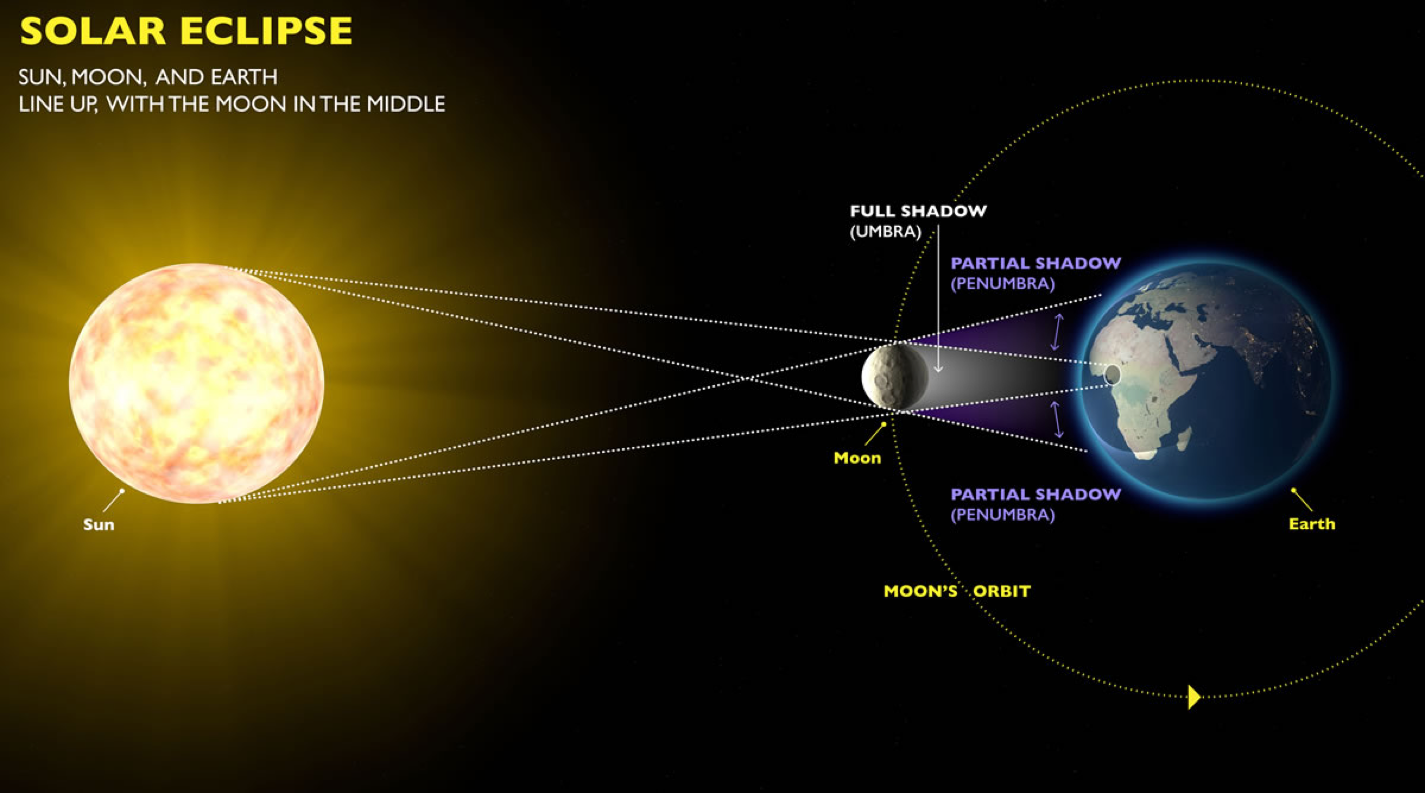
The Eclipse Wars: Magic vs Fantasies vs Fed Up Folks


For the last few years, it was common every time eclipses would happen for two types of posts to dominate the internet.


One set would talk about the amazing power to spiritual growth and manifesting your desires which the eclipse would unleash. Cause, things are about to get real, and the alignments are happening and get ready to download all the goodness from the universe...you know...that kind of thing.


The others would be like "don't do any magic anywhere close to an eclipse ever under any circumstances."


One has more value than the other, neither is really right.


There has been a swing towards "stop commenting on eclipses, just let people do their magic" or "stop the doom and gloom different traditions believe different things."


This...is also kind of a problem. It kind of ignores that magic stuff is magic because the magic involved is real. If there is a reason for the warning, trashing the warning isn't the right answer, just like a full scale ban on eclipse magic isn't the answer.


Let's unpack this idea a bit.


People feel comfortable dismissing the warnings for two reasons.


One is that most people's familiarity with astrology is modern astrology. Modern astrology is basically a New Age version of a Myers Briggs test. It's pretty changeable and idiosyncratic. It presents fairly simple breakdowns of personalities and behaviors and trends such that the complex array of behaviors and feelings which make up a person will often line up in some way which makes a fair number of modern astrology memes and claims seem real enough. They are also tenuous enough that they seem like a fun thing to talk about but not something super meaningful.


The other reason is that a lot of people approaching magic from the "we're about to download all of the universe's blessings" side of things look at magic as just being about feelings and intentions. Magic doesn't really need to do anything or accomplish anything, but if it does, great. Magic is about praying, or focusing, and helping prepare yourself to find and utilize the opportunities for success that the universe presents you. Your intentions are more important than the specifics of what you do or when you do it.


If that approach to astrology were the basis of the eclipse statements, and if those ideas about magic were anything remotely true, then sure dismissing the eclipse statements would make sense. People should mind their own business and not give dire warnings. We all know, those views on magic are nonsense and that the type of astrology generating the eclipse warnings isn't modern astrology.


The various forms of traditional astrology (Classical, Medieval [Traditional], and Renaissance) all deal with much more specific analysis to create fairly specific readings about events, moments, trends and cycles. It's used to answer specific questions, sometimes as detailed as where to find lost things, and it is used to choose moments at which to do things - reliably enough that major companies and world leaders often still use it.


We could still dismiss it as "this is just one set of beliefs," except that traditional forms of astrology go back to Babylon, and then developed through Egyptian, Greek, Roman, Byzantine, Indian, and Arabic cultures before reaching medieval Europe. We have literally thousands of years worth of data and analysis from astrologers for examining and testing their ideas.


Traditional astrology is a science based on the way it uses and analyzes data. It doesn't claim the stars are causal or to fully explain why there is a relationship between the sky and events. But it maps how the sky works as a clock which can tell us about events. It can track to people's lives as well as to larger occurrences in society.


If you look at reports from Austin Coppock he will routinely lay out centuries worth of history that provides examples of events that happened under similar astrological conditions. It's really not all that far off from meteorology in terms of its quality as a science, and it has a larger data set than most things people recognize as science.


So the problem with dismissing the warnings or holding a view in opposition to them is, you're basically the guy on youtube who did his own research.


That said, the warning to do no magic is still bullshit. Not because astrology isn't true or because magic is all fairy dust and wishes.


Eclipses denote periods of upheaval, conflict, and chaos. They are historically understood as a powerful time for signaling negative events and catastrophes.


Magic, is often about deciding how you want the world to be despite how the world is. So the fact that an eclipse might indicate stronger energies of conflicts or chaos doesn't mean everything that will occur in life is conflicts and chaos. There are other factors happening in the sky, and also other factors happening in the world. The eclipse is one factor. Magic is also about picking the powers and forces you want to be active in a situation and directing or strengthening those while keeping out others. So if you don't want eclipse energy in your life, do magic about it.


The "don't do eclipse magic" movement was really kind of a knee jerk reaction to the "I'm going to get so many blessings when I drink my eclipse moon water" internet culture. It was kind of like "defund the police" where most people mean restructure funding to appropriate auxiliary departments and services to handle things police shouldn't handle and mitigate causes of crime while no longer allowing police to amass military arsenals. It was easier to say "defund the police," but the problem was people thought it meant "don't pay cops and shut down all police departments."


Don't do eclipse magic really meant, "don't invoke eclipse energies for blessings or to power beneficent work."


See, in astrology, there are two ways in which the moment of the eclipse might impact you. One is just electing to do a given thing in a given moment. Some times are better for starting certain endeavors and some aren't. Some moments might actively hinder what you're doing. It might not be impossible to be successful, but you're not giving yourself the best possible start if you don't pick a good moment, and you might be fighting an uphill battle if you pick the wrong moment.


The other end of it is using astrological powers in magic. You might make a petition or a talisman to utilize the given powers of astrological movements and relationships which make up a particular point in time. Some moments will allow you to make powerful objects or imbue spirits into materials which you can then work with later on and have the benefits of the strength those astrological powers had at the time your object was made.


Working in an eclipse is picking a moment that has the qualities of the eclipse. So it's good for eclipsey stuff and not so good for not-eclipsey stuff. The bigger issue though is if you're trying to call on the eclipse, or call on the Sun or Moon to power what you're doing. If you are trying to do lunar magic, it's going to have the nature of the eclipse.


In some sense, since we live in the sub-lunar realm, and the moon reflects the rest of the powers of the heavens into our world, all astrological powers will reflect through the Moon which will impart the character of the eclipse onto other powers involved to some degree. So any magic drawing on the planets or stars might not be advisable.


Magic involving gods, spirits, ancestors, planets, faeries, nature spirits, elementals...all of that is still business as usual. Unless they have some eclipse issue of their own.


So basically, if you want to create conflict or upheaval, then YES, totally do magic during the eclipse and invoke the powers of the eclipse to do so. Pick an eclipse where the sun or moon are in some aspect with a malefic planet or where the skies have some other chaos that you want. I imagine there is an argument that if you're doing this to make a talisman you might end up with a weak talisman rather than a powerful talisman for the forces of chaos and destruction...but, you can do magic where you call upon the powers of the stars and planets with out making astrologically elected talismans.


If you want to do positive things, or empower the status quo in your life, or anything not related to the eclipse, yes, you can totally do that. It might even be a good idea to do magic if you're worried that somehow the specifics of the astrological moment of the eclipse portend disaster for your particular circumstances. That's totally what magical intervention is for. In that case though, do magic that doesn't involve the eclipse or the Sun or Moon. Work with different powers and unrelated materials.


Now some of you might still be saying "well, that just isn't my tradition, so I don't have to worry about it."


Again, it's not really a question of tradition. It's thousands of years of observed and analyzed date. But ok. Maybe it's not your tradition.


Then what is your tradition?


If your tradition uses magic developed in the Post-Golden Dawn magical revival then it kind of is the basis for your tradition. So if you're involved in any sort of Wicca or NeoPagan witchcraft, any form of ceremonial magic or chaos magic, then yes, your tradition is based on systems influenced by these ideas and the cultural views which shaped them.


Even Ar Draoicht Fein, a pan-Indo-European Druid organization which doesn't teach much magic, holds that you need to observe the cycles of the moon in timing your magic. It draws this not from druid tradition, but from NeoPaganism which is pulling it from the Solomonic grimoires which influenced Wicca.


Most reconstructionist traditions have limited access to the magics of the cultures being reconstructed. The places where we have the richest information on historical magic were the Mediterranean and Levantine cultures. These were all cultures which participated in the forms of astrology which developed into Traditional Astrology, and as such these were cultures which had this view point.


So, if you're doing magic, it probably is somewhere in the DNA of your tradition.


There is something to letting people get their fingers burned. It's shitty not to give them the info needed to avoid burns or help them do something useful while minimizing burns and maximizing learning.


For the TL;DR folks...


Best Answer: Eclipses impact certain powers negatively so don't do magic utilizing those powers unless you want that kind of influence, do magic using other means.


Ok Answer: There are different approaches to magic, let people do their own thing.


Over-Reaction Answer: Never do any magic of any kind anywhere near an eclipse ever.


Wrong Answer: The eclipse is going to open an energy portal to your dreams and all your wishes will come true if you just claim them.  


If you want to understand this astrology stuff check out Hawk Astrology, Austin Coppock, The Astrology Podcast, RenaissanceAstrology, Nina Gryphon, and Stellar Sorcery.


If you liked this here are ways to follow and support!

 If you enjoyed this please like, follow, and share on your favorite social media! We can be followed for updates on Facebook.


If you’re curious about starting conjuration pick up my new book – Luminarium: A Grimoire of Cunning Conjuration


If you want some help exploring the vast world of spirits check out my first book – Living Spirits: A Guide to Magic in a World of Spirits


Now Available: An Audio Class and collection of texts on the Paracelsian Elementals 

More Opportunities for Support and Classes will show up at Ko-Fi